Story
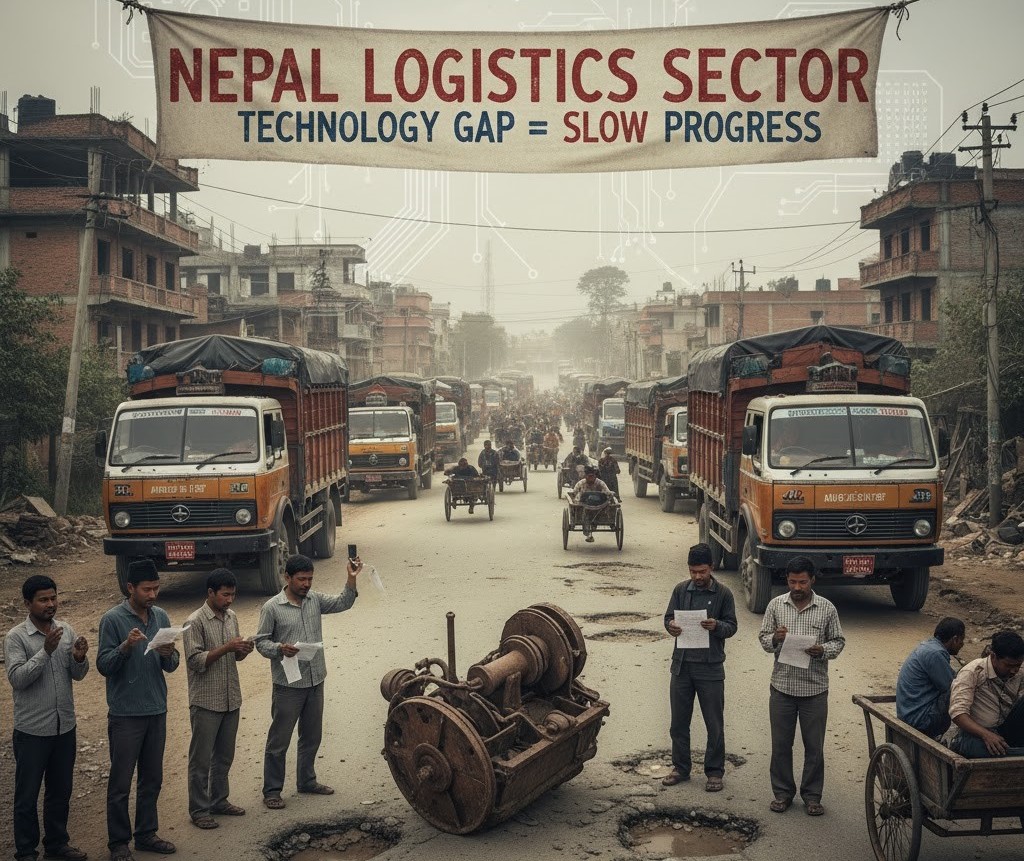
Why Nepal’s Logistics Sector Is Struggling: The Technology Gap Slowing a Nation’s Progress
Kathmandu, Nepal —
As global logistics firms race toward automation, artificial intelligence (AI), and smart tracking systems, Nepal’s logistics sector remains stuck in an outdated cycle of manual operations. From courier deliveries to freight forwarding, inefficiency has become a defining feature of the industry — and experts point to one major cause: the lack of technology integration.
A Growing Industry with Old Tools
Nepal’s logistics network plays a crucial role in connecting the nation’s mountains, plains, and trade borders with India and China. However, most local logistics companies continue to depend on paperwork, phone calls, and human coordination to manage shipments.
“Many operators still rely on registers, Excel sheets, and personal calls to track parcels,” says Ramesh Shrestha, a Kathmandu-based logistics consultant. “This is not sustainable in today’s fast-moving supply chain environment.”
While neighboring countries like India have adopted real-time tracking systems, automated warehouses, and data-driven logistics planning, Nepali companies have been slow to follow. As a result, delivery delays, inaccurate tracking, and lost shipments remain common problems.
The Digital Divide
The root of Nepal’s logistics challenges lies in its uneven digital development. Major urban areas like Kathmandu and Pokhara have started experimenting with technology-based delivery management systems, but rural logistics networks — which handle a large portion of the country’s e-commerce shipments — remain disconnected.
In remote districts, unstable internet connectivity, low digital literacy, and high costs of adopting modern logistics software prevent small and medium operators from digitizing their systems. Without integrated tracking or online management tools, it becomes difficult to ensure transparency, accountability, or timely delivery.
“The digital divide between cities and villages has created an unbalanced logistics ecosystem,” explains Bikash Gautam, a supply chain researcher at Tribhuvan University. “Even if e-commerce platforms are ready to scale, the last-mile delivery network is still stuck in the old model.”

Manual Operations Lead to Costly Delays
The impact of outdated systems goes beyond inconvenience. Manual operations increase the chance of human error, fuel inefficiency, and customer dissatisfaction. Many couriers still manage thousands of shipments using handwritten data or basic spreadsheets, making real-time updates nearly impossible.
In international cargo, the lack of integrated digital systems also complicates customs documentation, airway bill management, and cross-border coordination. Businesses often face delays at checkpoints simply due to missing or mismatched paperwork — issues that could easily be solved through electronic documentation (e-AWB) systems.
Technology Adoption Still Low
While some Nepali startups and software companies have developed logistics management solutions, adoption across the industry remains low. The reasons are multifaceted:
-
Limited awareness of how digital tools can improve profitability.
-
High setup costs for automated tracking and warehousing systems.
-
Lack of skilled IT staff in logistics companies.
-
Minimal government incentives to promote logistics digitalization.
“Digital transformation requires investment, and small logistics firms are hesitant because they fear short-term losses,” says Kiran Maharjan, founder of a local courier company. “But in the long run, staying manual will cost them more.”
The E-commerce Pressure
With online shopping growing rapidly in Nepal, logistics companies face mounting pressure to modernize. E-commerce giants and cross-border platforms require faster, trackable, and transparent delivery services. However, the absence of automation and real-time data sharing often results in delays and customer complaints.
“E-commerce is expanding faster than logistics innovation,” notes TechVisit Nepal, a local logistics software provider. “Without modern CRM and AI-powered route optimization, Nepali logistics firms will struggle to meet the demands of digital commerce.”
What Needs to Change
Experts agree that Nepal’s logistics modernization will depend on a multi-level approach:
-
Government support: Policies promoting digital logistics infrastructure, e-AWB systems, and smart customs procedures.
-
Private sector innovation: Adoption of affordable, localized logistics software tailored to Nepal’s terrain and business scale.
-
Digital literacy and training: Upskilling logistics workers in data management, software use, and AI-based decision tools.
-
Public–private collaboration: Encouraging partnerships between tech firms and logistics providers to accelerate transformation.
If executed properly, these steps could reduce delivery times, cut costs, and improve transparency — making Nepal more competitive in regional and global trade.
A Slow but Inevitable Transition
Despite challenges, the digital transformation of Nepal’s logistics sector is inevitable. Younger entrepreneurs entering the industry are more tech-savvy and open to innovation. Mobile-based logistics platforms, GPS tracking, and AI-powered dispatch systems are slowly gaining traction.
However, unless digital adoption becomes widespread, Nepal risks missing out on regional trade opportunities and economic growth. As global logistics races toward automation, Nepal must bridge its technology gap — not just to improve efficiency, but to secure its place in the digital supply chain future.